












Nominating Mitt Malaprop
Romney has the GOP nomination wrapped up — but his serial verbal miscues will haunt him in November

The Donald has spoken. He knows a done deal when he sees one.
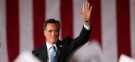
After Florida, Mitt is the Republican nominee. And the morning after, to the relief of Democrats and the distress of the conservative commentariat, he proved again that he is the gaffe machine that keeps on giving.
First, the state of the race: Romney is ahead of Barack Obama's pace in 2008. It was Super Tuesday then, still a month from now, when I argued that the Democratic contest was all over except for the noise, the ritual combat, and the counting, given that party rules made it impossible in fact if not in theory for Hillary Clinton to catch up. Obama had a lead, and proportional representation would protect it, awarding him almost as many delegates as her even in the primaries he lost.
The GOP has a time-limited form of proportional representation — although Florida, which went earlier than it was supposed to, handed all 50 of its delegates to Romney on a winner-take-all basis. But it will be schedule and resources which more than anything else make the chances of stopping Romney less than zero.
For other candidates, the verbal miscue is an episode; for Romney, it's an epidemic.
Gingrich's path forward heads straight into Romney firewalls, but Newt can survive the unfriendly month of February if he doesn't run out of money. He could conceivably achieve something unprecedented in presidential politics, a third resurrection, in the March Super Tuesday showdown in the South and Texas. (Maybe he can find another Juan Williams on whom to land a racially charged punch.) But then, in a single big state primary, Pennsylvania early on or ultimately California, Romney, his super PAC, and the GOP establishment will dump tens of millions of dollars of dirt and relentless invective on an underfunded, undisciplined, unorganized Newt. This is what doomed him in Iowa and Florida. It was what the Romney enterprise and its fellow travelers didn't do in South Carolina; they won't make that mistake again.
There's another factor that's fast propelling a frontrunner who won only two of the first four contests. A bedeviled religious right and movement conservatives have conspicuously failed to unite behind one candidate. In 2012, the dividing wedge is Gingrich's private life, which drives unforgiving true-believers to the hopeless Rick Santorum. Things might have been different if Rick Perry hadn't been so irredeemably, indelibly hapless after he entered the race and shot into the lead. But historically, from 1988 to 2008, the far right's impotence in the GOP presidential process has been a hardy perennial. They can dictate the platform, but they don't pick the nominee.
So it's Romney in 2012, despite glaring weaknesses revealed in the primaries, from his animatronic awkwardness to his plutocratic profile. The latter has been a product not just of attacks from his opponents — and the attacks will be unremitting in the general election — but of gaffes that are in reality self-revelations of his actual character and conviction. When he slips the confines of his canned answers, when an off-message moment or question deflects him from toeing his adviser's carefully formulated tropes, he tends to shift from Ken Doll to Gordon Gekko.































Follow Us: